
There comes a point in many women’s lives when they realize they have spent decades earning.
Earning opportunities. Earning promotions. Earning trust. Earning respect. Earning financial security. Earning the right to take up space. Earning the confidence of others. Earning the title, the role, the seat at the table.
For many women, achievement begins early. Work hard. Be responsible. Be prepared. Be dependable. Prove yourself. Add value. Contribute. Carry your share.

For a long time, the conversation about women in leadership centered on presence…how many women are in the room, how many at the table and/or how many are in senior roles.
Progress was measured by visibility. By representation. By whether women were included in spaces where decisions were being made. And that work mattered…and it still does.

For a long time, leadership advice for women sounded like this:
Move faster. Speak up sooner. Lean in harder. Claim your seat at the table.
The underlying message was always about acceleration. If women could just move quickly enough, confidently enough, decisively enough, the path upward would open.

For years, leadership growth was defined by expansion. There was more responsibility, more visibility, more opportunity and more yeses. Women were encouraged to take it all on…not because it was sustainable, but because access itself felt fragile. If the door was open, you walked through it. If the invitation came, you accepted. But…something has shifted.
As 2026 unfolds, more women in leadership are no longer asking what else they should take on. They’re asking something far more powerful… “What actually deserves my leadership now?” This isn’t burnout speaking. It’s discernment.

There’s a new pattern emerging in executive searches, board conversations and leadership appointments…especially in the final quarter of 2025.
When workplace cultures fracture…
When teams lose trust…
When uncertainty rises…
When change accelerates faster than clarity…

But as we step into a new season of work, complexity and accelerated change, a different resource is emerging as the most constrained…and the most valuable:
Energy.
Not hustle. Not hours. Not availability.
Energy.
And in 2026, the most successful women leaders will not be the busiest ones. They will be the ones who manage their energy with precision.
Time is finite and energy is selective.
You can schedule time. But you cannot fake energy.

Women lived inside that equation for decades. But something has shifted.
The shift was quiet, powerful and irreversible.
Women leaders are no longer willing to sacrifice themselves in order to succeed. And in doing so, they are setting an entirely new standard for the next generation of leadership.

There’s a quiet truth among executive women that rarely gets spoken aloud:
You can excel at work…and still fell like you’re slowly disappearing at home.
Not because you’re neglectful.
Not because you don’t care.
But because you’re spent.
After a day filled with decisions, emotional labor, strategic thinking, complex personalities, and non-stop expectations…the people you love most often get the version of you that’s running on fumes.

There’s a unique kind of exhaustion high-performing women experience. One that has nothing to do with how many hours they work, and everything to do with how much of themselves they pour out. To the outside world, you’re successful, accomplished, capable, trusted and respected.
But inwardly, you might be carrying something heavy, something subtle, something few people talk about openly.

There’s a quiet crisis happening among executive women.
Not burnout.
Not overwhelm.
Not “doing too much.”
It’s something deeper…and more costly:
We are losing ourselves in the very success we worked so hard to create.
It shows up subtly at first:
You’re “fine,” but you’re never really rested.
You’re “performing,” but you’re not fully present.
You’re “leading,” but your not leading your life.
And here’s the truth most executive women won’t say out loud:
You can be wildly successful…and completely misaligned.
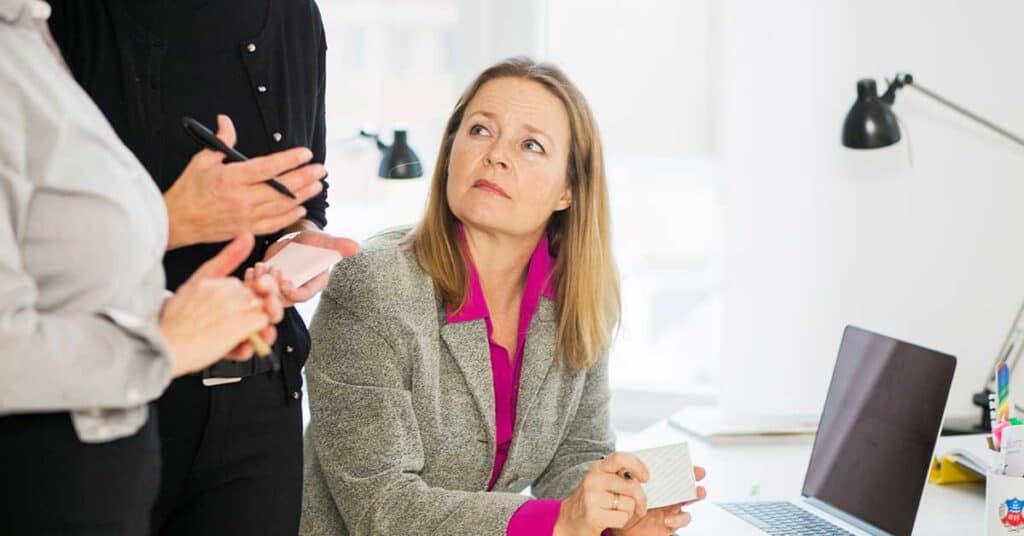
There’s a crisis happening among high-achieving women…but you won’t see it on performance reviews, succession plans or leadership dashboards.
You’ll see it in quieter places:
In the car before walking into the house.
In the hallway between meetings.
In the bathroom before a critical presentation.
In the moments where no one is watching…and you finally exhale.
It’s the crisis of high-capacity women quietly running out of capacity.
Women who lead brilliantly…and live barely.
Not because they’re failing. But because they’re carrying too much, too quietly, for too long.
Which leads to the performance paradox…why executive women are exhausted at a level no one talks about. Women in executive roles don’t just carry responsibilities.

For decades, leadership credibility was earned through experience, expertise and endurance. You worked hard, delivered results, built relationships, and over time…people trusted your judgement.
That formula still matters. But in 2025 and beyond, something fundamental has changed.
Today, the question isn’t “Can she lead?” It’s “Can she lead what’s next?”
The world has entered a new credibility era, one defined not by tenure or title, but by adaptability, digital fluency and a deep understanding of how technology shapes human potential.
Women leaders are already confident. They’re accomplished, proven and prepared. But confidence alone doesn’t guarantee credibility anymore. The leaders being noticed, and trusted, are the ones who can speak the language of the future.
