
She was looking for permission to trust her own.
Most women don’t arrive at life’s crossroads because they lack information. By the time they reach a significant decision, they’ve usually done the research. They’ve weighed the options. They’ve considered the impact on the people they love. They’ve imagined every possible outcome and replayed the decision from more angles than anyone else ever will.
The issue is rarely preparation. It’s trust.

There area few words women use more often, and reveal less through, than this one:
“Fine.”
How are you? Fine
How’s work? Fine
How are things at home? Fine
How are you holding up? Fine
It’s become such an automatic response that most of us don’t even think about it anymore. We say it in passing, with a smile, while juggling schedules, answering emails, managing responsibilities, and moving on to the next thing on the list.
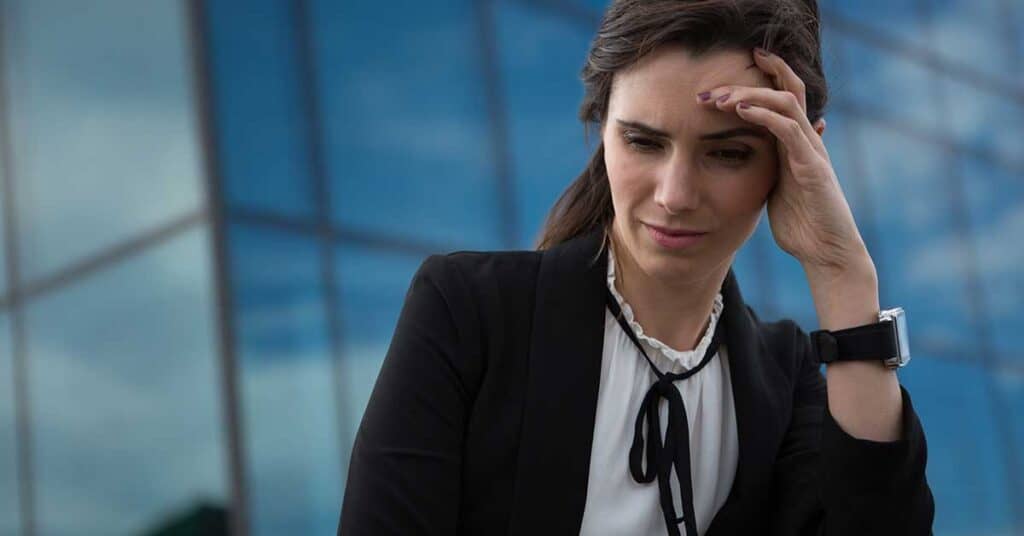
There is a kind of grief that rarely gets talked about. Not because it is uncommon, but because it can be difficult to explain. Most people understand grief when something ends. A relationship ends. A career ends. A chapter closes. There is a clear event, a visible transition, and people recognize that something has been lost.

People trust you. They rely on you. They know you can handle complicated moments without falling apart. You become the steady one, the capable one, the person who can absorb pressure and still keep moving.

She was the flexible one, the reliable one, the one who could step into difficult situations without creating more tension around them.
If something needed to get done, she figured it out. If personalities became difficult, she adjusted. If deadlines tightened, she absorbed the pressure quietly and kept moving.
People appreciate her for it.
They trusted her. They depended on her. They described her as collaborative, supportive, professional, and calm. And for a long time, those qualities felt like strengths…because they were.
But over time, something else started happening too.

For years, leadership growth was defined by expansion. There was more responsibility, more visibility, more opportunity and more yeses. Women were encouraged to take it all on…not because it was sustainable, but because access itself felt fragile. If the door was open, you walked through it. If the invitation came, you accepted. But…something has shifted.
As 2026 unfolds, more women in leadership are no longer asking what else they should take on. They’re asking something far more powerful… “What actually deserves my leadership now?” This isn’t burnout speaking. It’s discernment.

Executive women are some of the most capable, resilient and visionary leaders in the world.
And yet, behind closed doors…or more often, behind composed smiles, many are wrestling with a truth they rarely speak aloud:
Success has been expensive.
Not financially.
Emotionally. Energetically. Spiritually.
“Why does it feel like I’m giving the best of myself everywhere…except to myself?”
These are the silent trade-offs no résumé shows. No performance review discusses. No leadership conference acknowledges.

For decades, leadership credibility was earned through experience, expertise and endurance. You worked hard, delivered results, built relationships, and over time…people trusted your judgement.
That formula still matters. But in 2025 and beyond, something fundamental has changed.
Today, the question isn’t “Can she lead?” It’s “Can she lead what’s next?”
The world has entered a new credibility era, one defined not by tenure or title, but by adaptability, digital fluency and a deep understanding of how technology shapes human potential.
Women leaders are already confident. They’re accomplished, proven and prepared. But confidence alone doesn’t guarantee credibility anymore. The leaders being noticed, and trusted, are the ones who can speak the language of the future.
When Chanel’s CEO, Leena Nair, asked an AI took to show an image of her leadership team, the result was all men in suits.
It’s wasn’t malicious. It was mathematical.
AI pulled from a world that still equates “leadership” with “male.”
But here’s the real story: this isn’t just about who appears in a photo. It’s about what happens when women’s presence, power, and potential are misrepresented, or misunderstood, by the very systems shaping our future.

Over the past few weeks, the conversation around women and artificial intelligence (AI) has shifted dramatically. First, the headlines warned us: AI could put women’s careers at risk. Then came a new perspective: Women are already leading the ethical AI conversation.

High-achieving women often hold themselves to impossibly high standards. You juggle demanding careers, personal responsibilities and societal expectations…yet somehow still feel you’re not “enough.”
One of the hardest truths to confront is what we can be our own harshest critics. If you wouldn’t speak to a colleague, a loved one or a friend the way you sometimes speak to yourself, why is it acceptable to direct that treatment inward?

Let’s get one thing straight: Your reputation is not what people say about you.
It’s what people believe about you…when you’re not in the room.
And whether your realize it or not, you’re building it every single day.
In a world that constantly tries to put women in boxes…”too much”, “not enough”, “too ambitious”, “not read”…you have a choice. You can let others write the narrative…or you can own the pen.
Being the CEO of your own reputation means getting crystal clear on what you want to be known for…and backing that up with how you show up, communicate and lead. It’s not about polishing a brand. It’s about embodying your values. Consistently.
